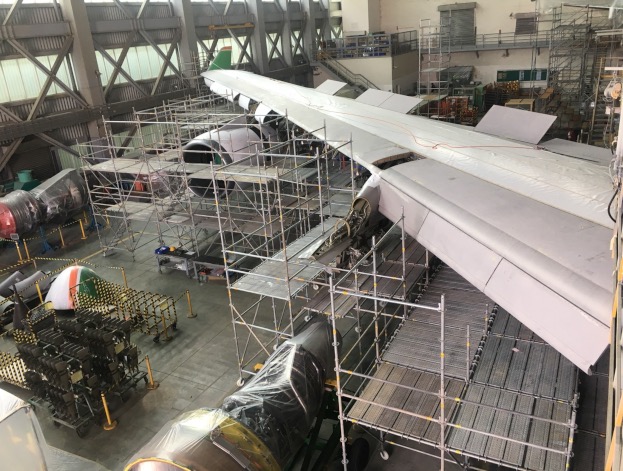
Aircraft Maintenance
On-Site Challenges of Aircraft Maintenance Platforms
Hidden Risks in High-Value Asset Maintenance
Aircraft are multi-million-dollar assets. Any accidental contact from a poorly designed maintenance platform can cause enormous financial loss. That’s why platforms must be rock-solid, vibration-free, and designed to avoid touching the fuselage—ensuring true operational safety for airlines.
Irregular Shapes & Large Height Differences
From the nose and landing gear to the wings and tail, aircraft structures are irregular and span different heights—often exceeding 6–10 meters. Traditional platforms struggle to cover all areas, requiring multiple setups and frequent adjustments.
Complex Maintenance Areas
Each section—wings, engines, fuselage, and tail—requires access from unique angles and heights. A single fixed platform simply cannot handle all demands, forcing crews to rely on several different systems.
High Storage & Transport Costs
Fixed platforms take up massive storage space and offer little flexibility. With airlines operating multiple aircraft types, each model requires its own dedicated platform—driving up storage and logistics costs while limiting adaptability.
Sucoot’s Ring Lock Scaffolding System Solutions
Flexible & Modular
Our Ring Lock Scaffolding System adapts to different aircraft models and service areas. Platforms can be adjusted in height and angle, or equipped with rolling units for mobility—ensuring precise access to every maintenance point.
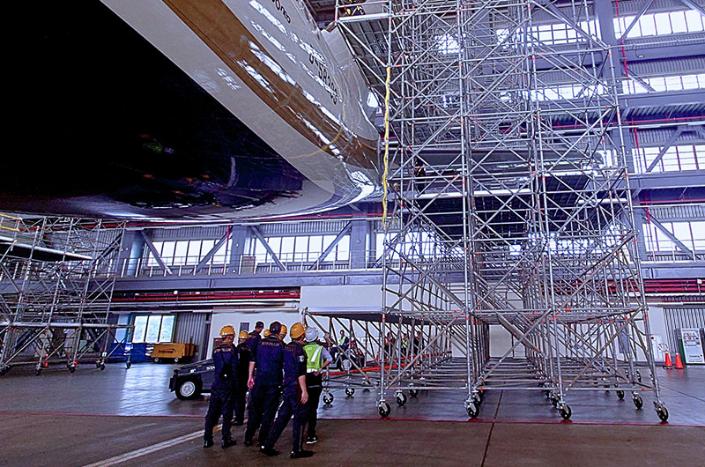
Stable & Safe
Built with precision-engineered connections that meet international safety standards, Sucoot scaffolding provides rock-solid stability. Technicians can work at height safely, with platforms designed to stay clear of the fuselage while allowing close access.
Efficient Storage & Transport
Unlike bulky fixed structures, our ring lock scaffolding system can be disassembled, stacked, and transported with ease—significantly reducing warehouse footprint and logistics costs.
Classic Case
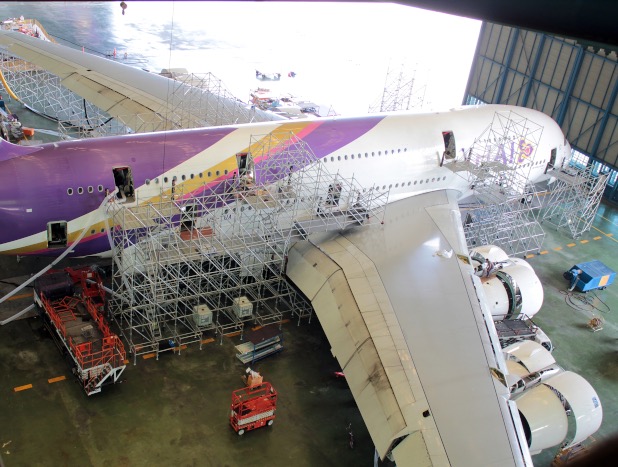
Aircraft Maintenance
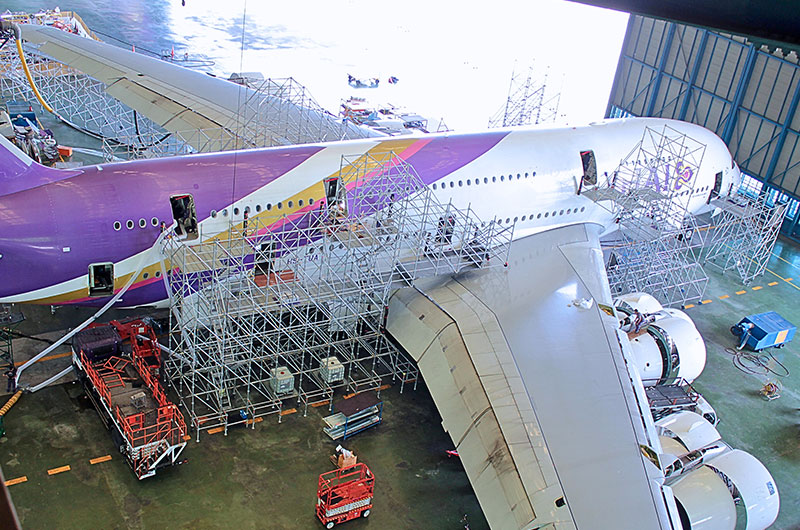
Thai Airways – A380 Aircraft Maintenance Scaffolding System
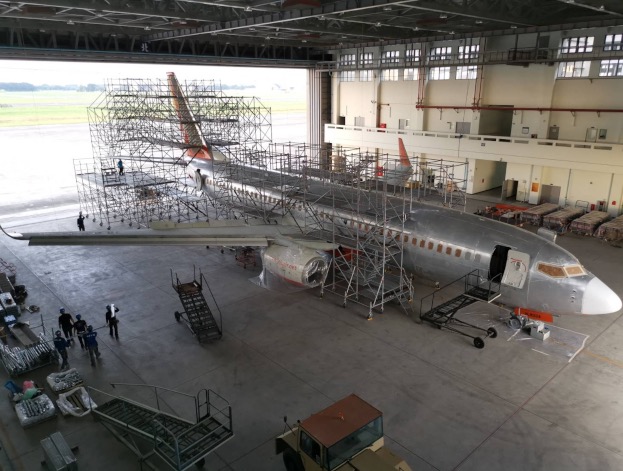
Aircraft Maintenance
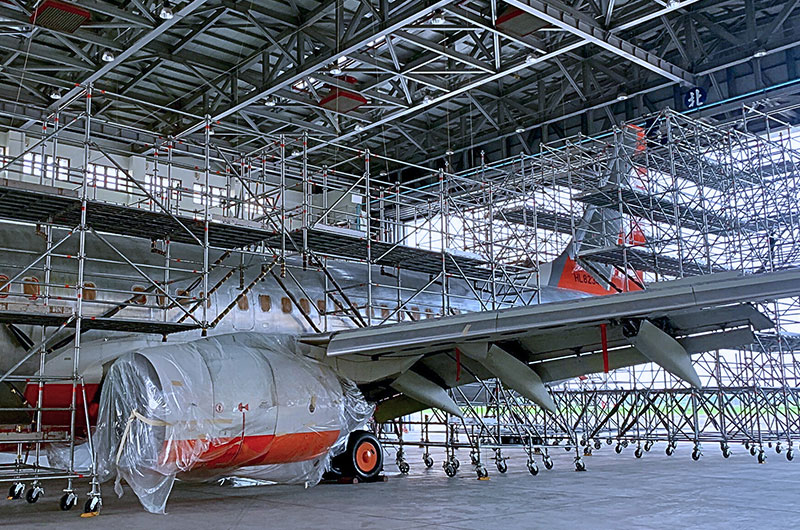
AirAsia – A320 Aircraft Maintenance Scaffolding